Kitchen & Pantry Organisation
Pantry Organisation Ideas That Actually Work: 20 Proven Methods (2026)
20 pantry organisation ideas that actually work in real kitchens. Zone systems, container strategies, labelling methods, and deep vs shallow pantry solutions from a professional organiser.
By Sophie Bennett, Home Organization Specialist · Last updated March 2026
A well-organised pantry saves the average household 15 minutes per day searching for ingredients, reduces food waste by up to 25 percent, and eliminates the frustration of discovering expired items hidden behind cereal boxes. These 20 pantry organisation ideas are tested methods used by professional organisers in real kitchens — not magazine styling tricks that fall apart after a fortnight.
This article contains affiliate links. If you purchase through our links, we may earn a small commission at no extra cost to you. See our full disclosure policy.
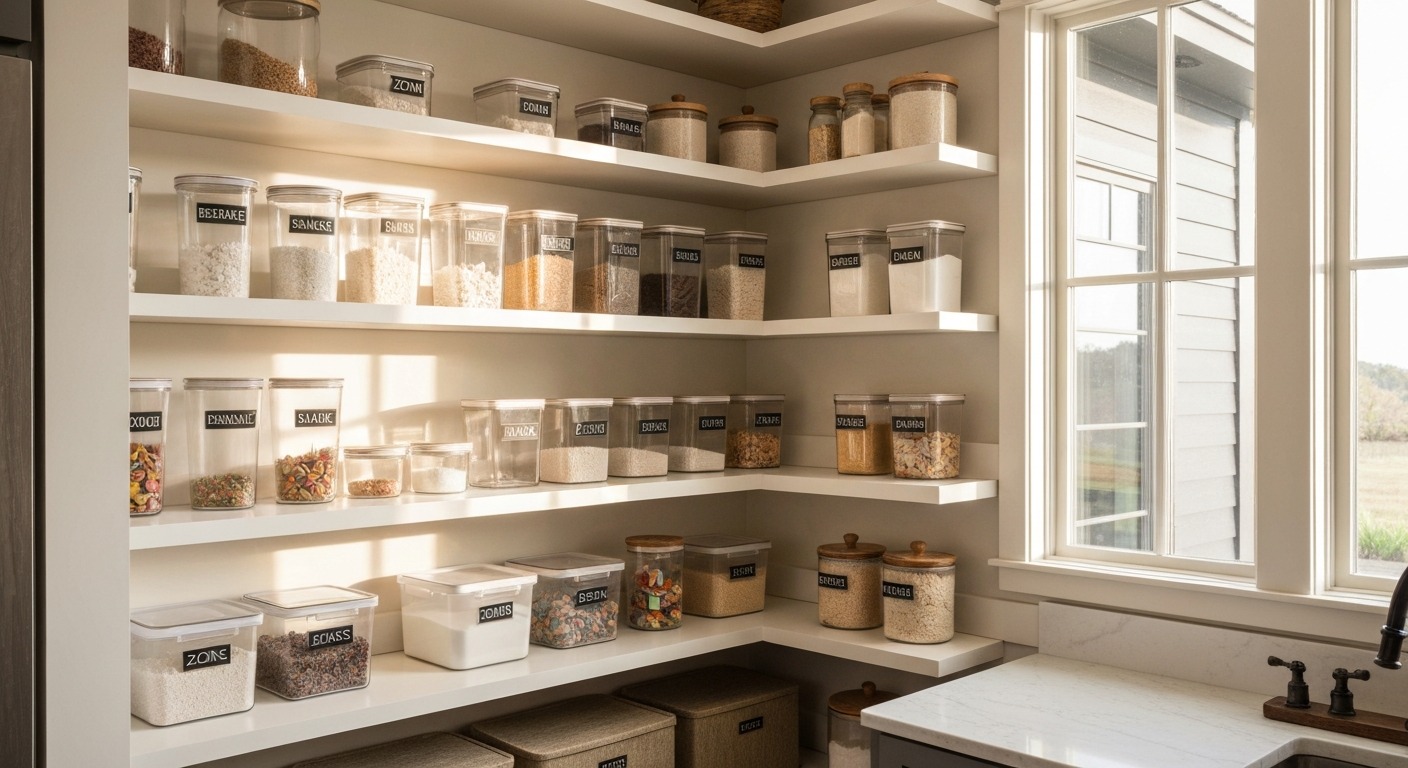
Table of Contents
- Why Most Pantry Organisation Fails
- The 20 Proven Pantry Organisation Methods
- Zone-Based Pantry Organisation
- Container Strategy: What to Decant and What to Leave
- Labelling Systems That Actually Last
- Deep Pantry vs Shallow Pantry Strategies
- Small Pantry Ideas: Maximising Every Centimetre
- Walk-In Pantry Organisation
- Seasonal Pantry Organisation
- Top Pantry Organisation Products (2026)
- Pantry Organisation on a Budget
- How to Maintain Your Organised Pantry
- Frequently Asked Questions
- Sources
Why Most Pantry Organisation Fails
You've seen the Instagram-perfect pantry. Matching containers in neat rows, colour-coded labels, pristine white shelves with artful negative space. It looks incredible. It also lasts about two weeks in a real home with real people cooking real meals.
The problem is structural: most pantry organisation systems are designed for how a pantry looks, not for how a pantry is actually used. They ignore cooking workflows, shopping patterns, and the simple fact that four different household members have four different mental maps of where things should go.
Professional organisers see the same failure patterns repeatedly:
- Overly complex systems that nobody maintains
- Containers without labels that become mystery boxes within days
- Aesthetics over accessibility — beautiful but impractical placement
- One-time organisation without maintenance habits built in
- Ignoring depth — items at the back of deep shelves become invisible
Good pantry organisation does exactly two things: it makes finding items effortless, and it makes putting items back the path of least resistance. Get those right, and the system sustains itself. Get them wrong, and no amount of matching containers will save you.
The methods in this guide are built around how people actually cook, shop, and live — not how a pantry looks in a photoshoot.
The 20 Proven Pantry Organisation Methods
Here is the complete list of methods covered in this guide. Each one is explained in detail in the sections that follow.
- Zone-based grouping by meal occasion
- The pantry audit and purge
- Clear container decanting for staples
- Consistent container sizing within zones
- Chalkboard or removable labelling
- Expiry date tracking on containers
- Shelf risers for canned goods
- Turntables for deep shelf access
- Over-door organisers for small items
- Under-shelf hanging baskets
- Pull-out drawer inserts for deep pantries
- FIFO rotation (first in, first out)
- Kids' zone at lower shelf height
- Baking station grouping
- Snack basket system
- Bulk overflow storage separation
- Square containers over round (space efficiency)
- Weekly 5-minute maintenance sweep
- Quarterly deep audit and reset
- Shopping list station at pantry entrance
Each method works independently, but the real power comes from combining several that suit your household's cooking style and pantry dimensions.
The Pantry Organisation Workflow
The infographic below shows the complete pantry organisation process — from initial audit through to ongoing maintenance. Follow these steps in order for the best results, or jump to whichever stage matches where you are right now.
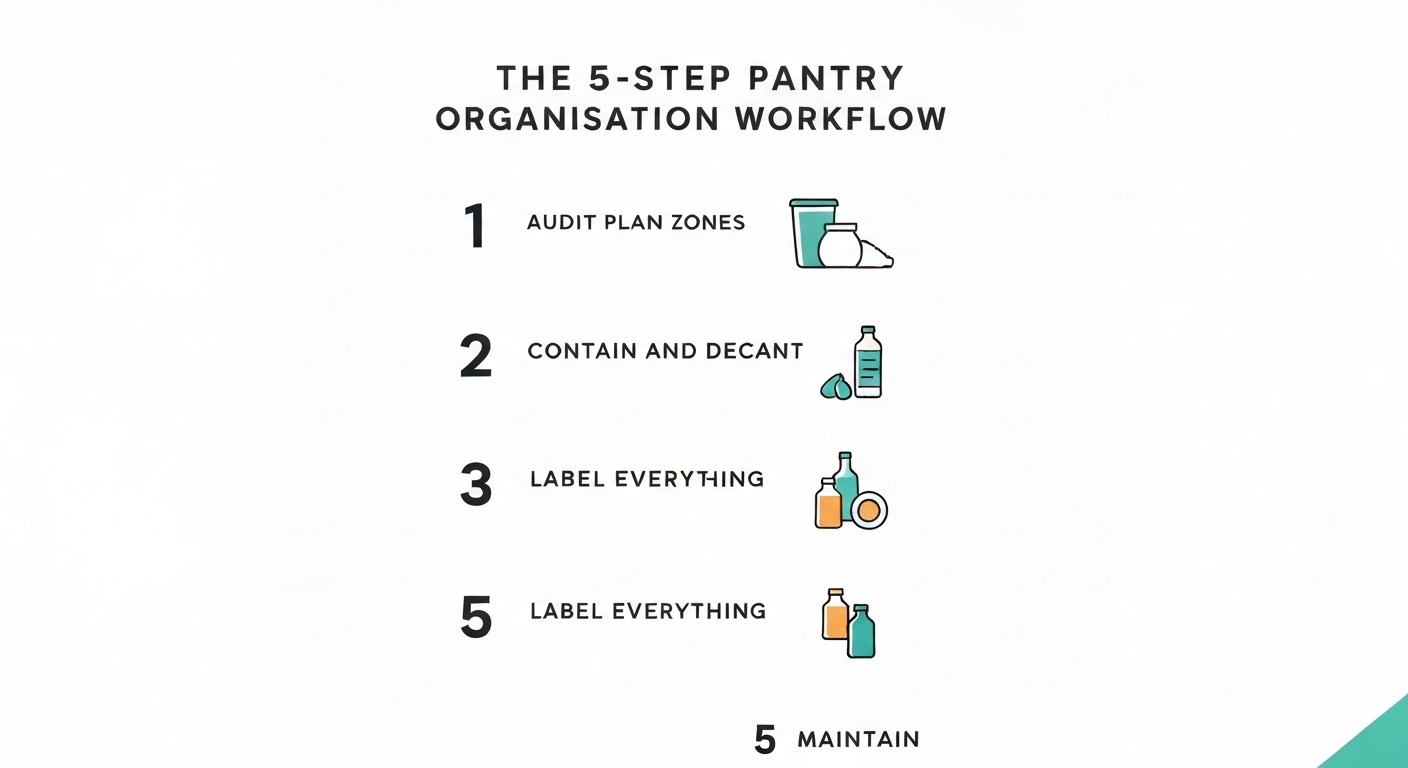
The complete pantry organisation workflow — follow these five steps for a system that actually lasts
Zone-Based Pantry Organisation
The single most effective pantry organisation principle is zone-based grouping. Instead of organising by food category alone (all tins together, all grains together), you organise by use occasion — grouping items that are used together in the same cooking context.
Why Zones Work Better Than Categories
When you reach for pancake mix on a Saturday morning, you also need maple syrup, a measuring cup, and probably some cooking spray. If those items are scattered across three different shelves, you're making multiple trips. Zone-based organisation puts everything for a given meal context within arm's reach.
Core Pantry Zones
Breakfast Zone — Cereals, oats, granola, breakfast bars, pancake mix, nut butters, honey, spreads, coffee, tea. Position at eye level for easy morning access when you're half-awake.
Baking Zone — Flours, sugars, bicarbonate of soda, baking powder, vanilla extract, cocoa powder, chocolate chips, breadcrumbs, sprinkles. Group together so a baking session means pulling from one shelf area instead of five.
Pasta & Grains Zone — Dried pasta (multiple shapes), rice, couscous, quinoa, lentils, dried beans, noodles. These long-shelf-life staples are perfect candidates for decanting into clear containers.
Canned & Jarred Goods Zone — Canned tomatoes, beans, corn, tuna, coconut milk, stocks, sauces, pasta sauce. Use shelf risers here so you can see every tin without unstacking.
Snack Zone — Nuts, dried fruit, crackers, popcorn, muesli bars, chips, rice cakes. Critical for households with children — a dedicated snack zone eliminates the entire-pantry rummage.
Cooking Essentials Zone — Oils, vinegars, soy sauce, fish sauce, hot sauces, spice mixes, salt, pepper. Items you grab mid-cook, so they need to be accessible and visible without moving other things.
Kids' Zone — A lower shelf or dedicated basket with age-appropriate snacks and lunchbox items. Children can access food independently, which reduces adult workload and builds autonomy.
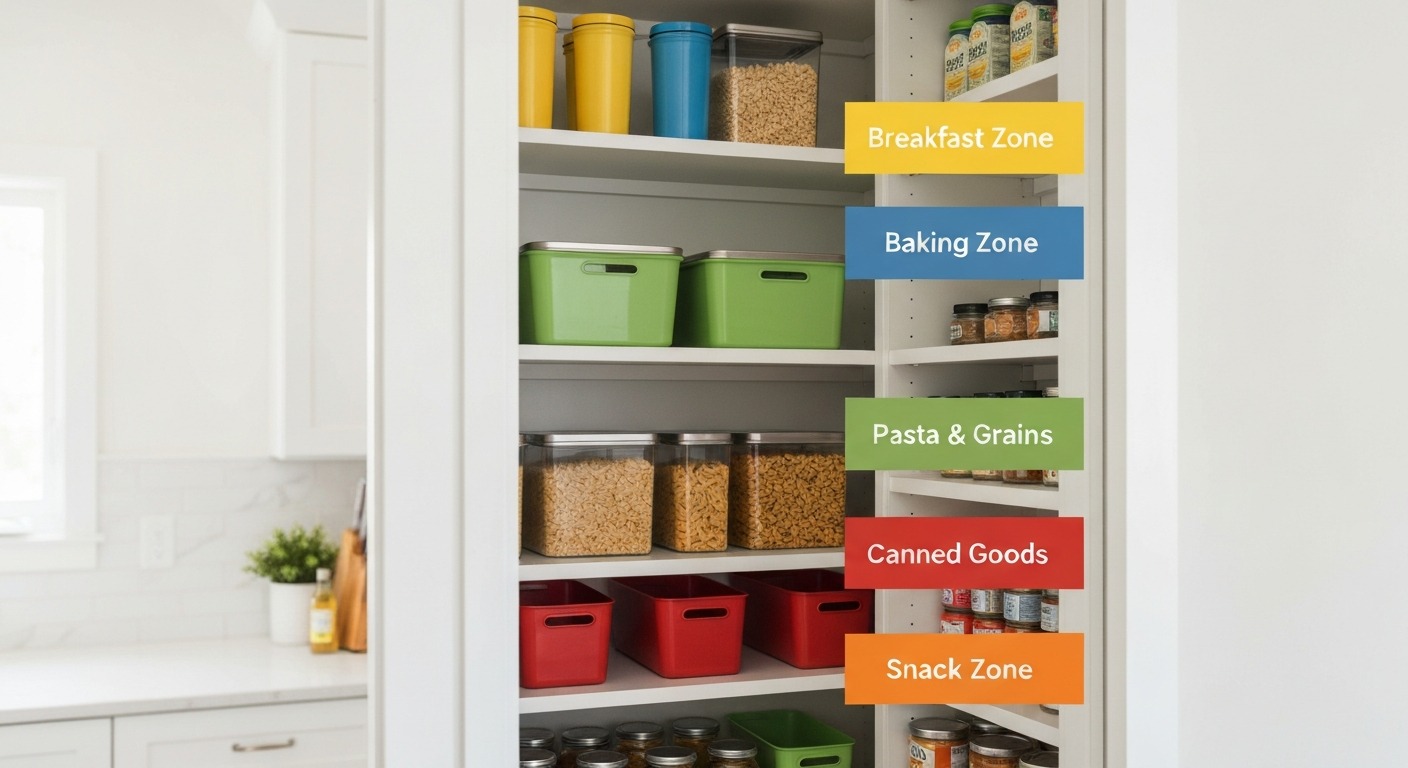
Zone-based pantry organisation groups items by how you cook, not just by food type
For more ideas on organising other areas of your kitchen alongside your pantry, see our guide to best kitchen cabinet organisers.
Container Strategy: What to Decant and What to Leave
You do not need to decant everything. In fact, over-decanting is one of the most common pantry organisation mistakes — it creates unnecessary work and often means you lose track of expiry dates and cooking instructions.
Items Worth Decanting
- Flours and sugars — prone to moisture, pests, and messy bag openings
- Cereals and oats — bags rip, go stale quickly, and waste shelf space
- Pasta and rice — easier to scoop, see quantity remaining, and stack neatly
- Dried legumes and grains — visual inventory at a glance
- Nuts, seeds, and dried fruit — stay fresher in sealed containers
- Crackers and snacks — keeps them crisp and creates stackable storage
Items to Leave in Original Packaging
- Canned goods — cans don't need containers, just consistent shelf placement and rotation
- Spice packets and sachets — too small to justify individual containers; use a basket instead
- Specialty and occasional-use items — not worth the container investment
- Oils and vinegars — already in functional bottles
- Items you'll use within a week — if the bag will be empty by Friday, don't bother decanting
Container Rules That Matter
Clear wins every time. You need to see what's inside without opening every container. Clear containers trump opaque ones regardless of aesthetics.
Consistent sizing within zones. Using the same container size for all your grains means they stack and align cleanly. Mixing sizes creates wasted vertical space and visual disorder.
Wide mouths for scooping. Flour, rice, coffee, oats — you're putting a scoop in. Narrow openings are frustrating. Wide mouths are practical.
Genuine airtight seals. Clip-top or gasket-sealed containers keep contents fresher than loose-fitting lids. This matters for flour, nuts, and cereals.
Square over round. Square and rectangular containers pack far more efficiently on shelves than round ones. You lose approximately 21% of shelf space with round containers compared to square.
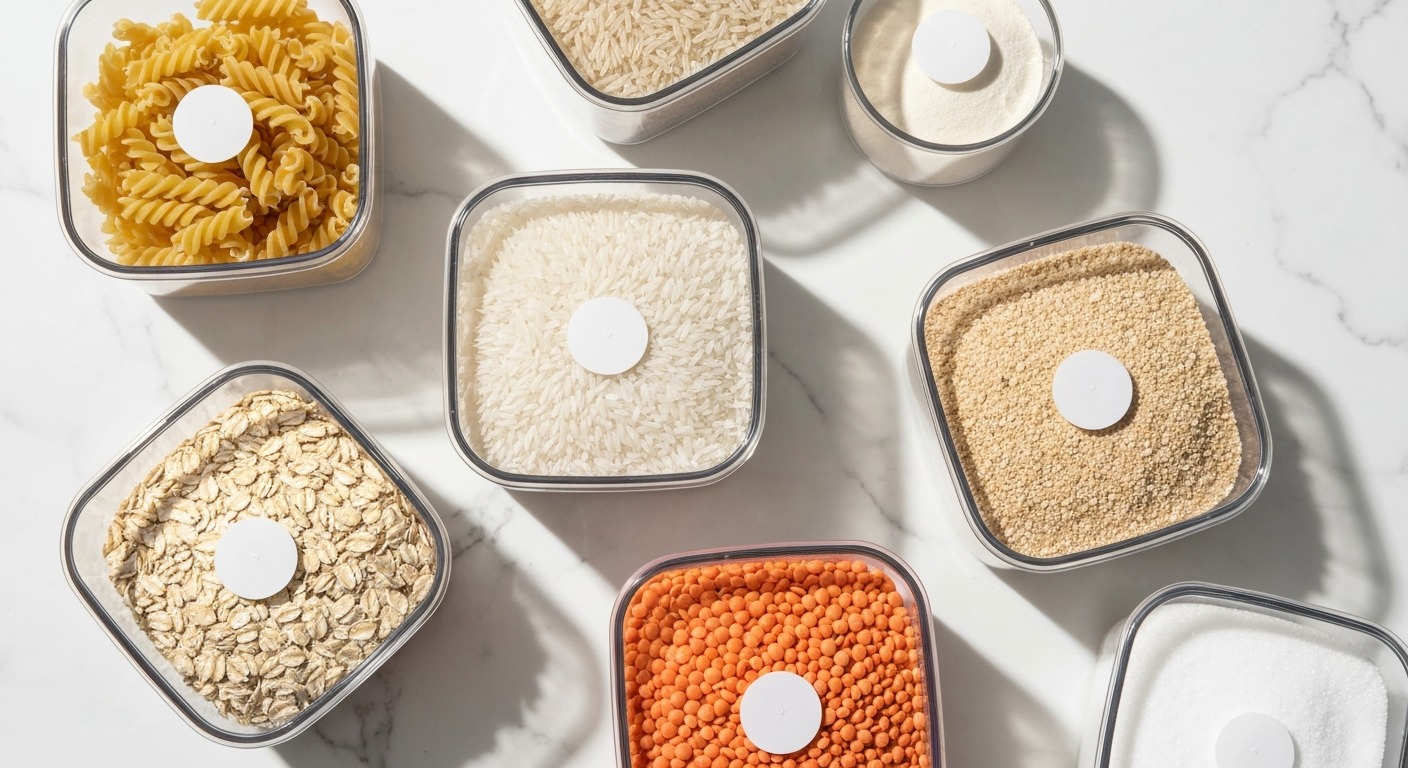
Square, clear containers with wide mouths are the most practical choice for pantry staples
Labelling Systems That Actually Last
Labels serve two purposes: finding things quickly and knowing when to restock or replace. A labelling system doesn't need to be elaborate — it needs to be maintainable.
What to Label
- Container contents — especially when items look similar (bread flour vs plain flour, white sugar vs caster sugar)
- Expiry dates — write the expiry date on the bottom of decanted containers with a permanent marker
- Zone markers — printed or handwritten shelf labels help guests and new household members navigate
- Allergy items — clearly mark containers holding common allergens
Labelling Methods Ranked by Practicality
1. Chalkboard labels + chalk pen — Looks clean, wipes off easily when you change container contents. Best for households that rotate what they buy. Cost: $8–$15 for a pack of 40.
2. Label maker (Brother P-Touch or similar) — Quick, uniform, durable. Best for larger pantries where consistency matters. Cost: $30–$50 for the device.
3. Printed label sheets — Professional appearance, customisable fonts. Requires a printer and clear adhesive sheets. Cost: $5–$10 per sheet.
4. Permanent marker on masking tape — Free, fast, and honestly works perfectly. Not Instagram-worthy, but completely functional. Cost: $0 with supplies you already have.
The most important label isn't on the container — it's the date you opened or decanted the item. Write it on the bottom or side with a marker. This simple habit prevents the "how old is this flour?" guessing game.
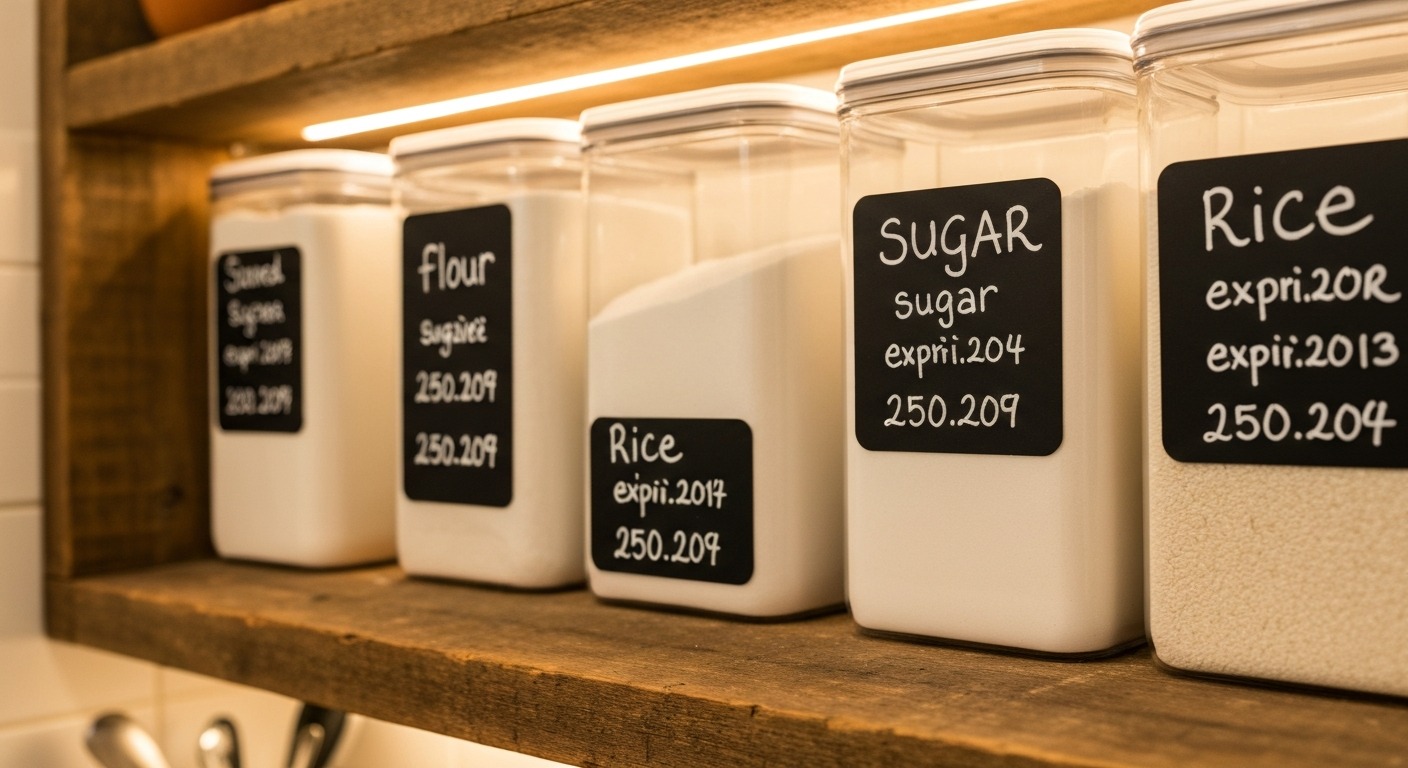
Chalkboard labels combine clean aesthetics with the flexibility to update as contents change
Deep Pantry vs Shallow Pantry Strategies
The depth of your pantry shelves fundamentally changes which organisation strategies work. A 60cm deep pantry shelf requires completely different solutions from a 25cm shallow shelf.
Deep Pantry Strategies (Shelves 40cm+ Deep)
Deep shelves are the most common cause of forgotten, expired items. The solution: make the back of the shelf accessible without removing what's in front.
Turntables (Lazy Susans) — A single turntable on a deep shelf gives instant access to items that would otherwise be buried. Ideal for oils, sauces, and condiments. One spin reveals everything.
Pull-out drawers or sliding baskets — Retrofit existing shelves with pull-out wire baskets. You pull the basket forward like a drawer, access what you need, and push it back. This eliminates the "arm reaching blindly into the back" problem entirely.
Tiered shelf risers — Step-style risers elevate items at the back so you can see over the items in front. Essential for canned goods on deep shelves.
FIFO rotation — First in, first out. When restocking, place new items at the back and move older items forward. This simple habit prevents expiry-driven waste.
Shallow Pantry Strategies (Shelves Under 35cm Deep)
Shallow pantries have the advantage of everything being visible, but the disadvantage of limited storage capacity.
Single-row container placement — Line containers in a single row so every item is immediately visible and accessible. No stacking items behind others.
Door-mounted storage — Over-door organisers are highest-ROI additions for shallow pantries. Use them for spices, sachets, foil, cling wrap, and small bottles. Measure your pantry door clearance before buying.
Vertical stacking — Use the full height of each shelf. Stackable containers and shelf risers turn one shelf into two functional tiers.
Wall-mounted spice racks — Free up shelf space by moving spices to the inside wall of the pantry or to the kitchen wall nearby.
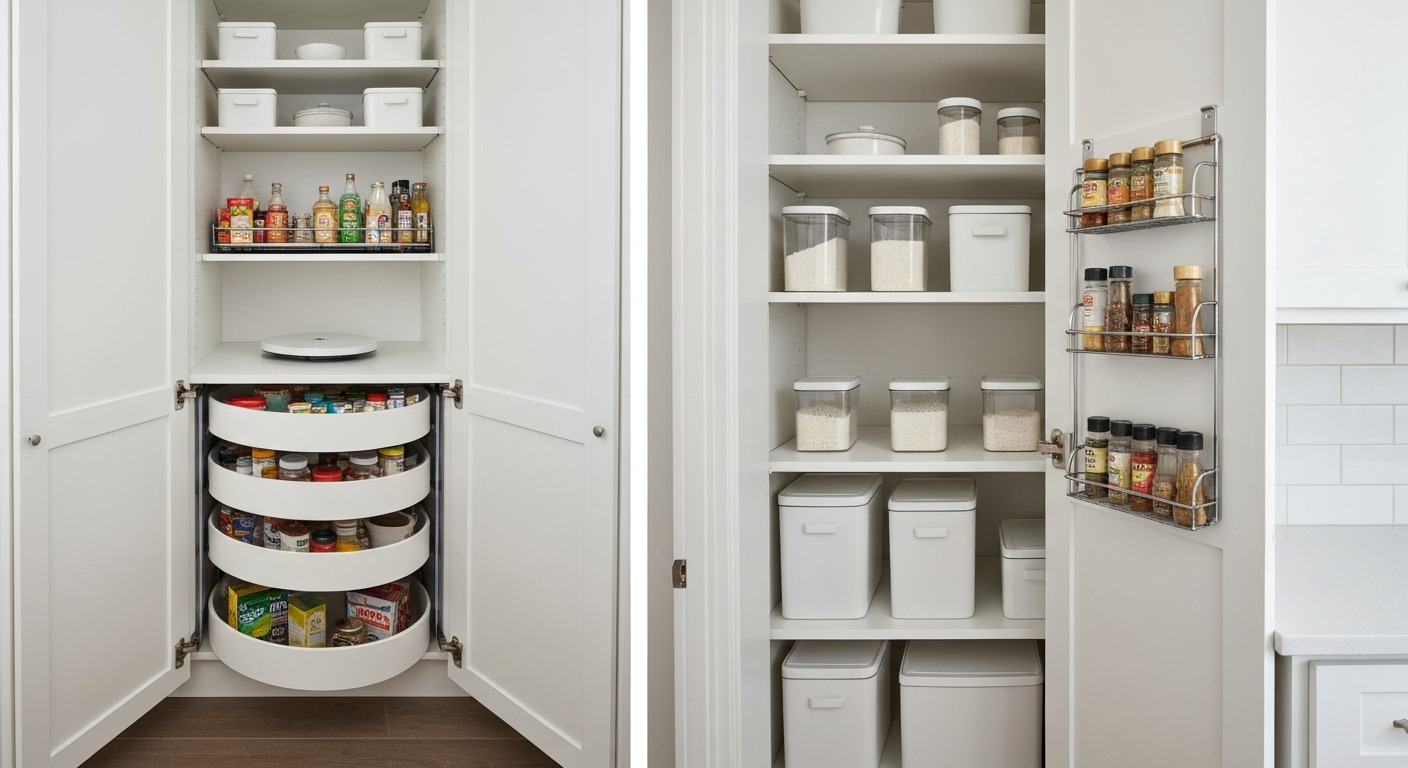
Deep pantries need rotation tools; shallow pantries need vertical maximisation
Small Pantry Ideas: Maximising Every Centimetre
A small pantry forces disciplined decisions. That's actually an advantage — every item earns its spot.
Method 1: Add Vertical Space
- Shelf risers double the effective capacity of a single shelf. A $12 wire riser turns one shelf into two tiers.
- Under-shelf baskets clip to the bottom of existing shelves, creating a hidden storage tier for flat items like snack bars, tea boxes, and spice packets.
- Stackable containers with flat lids let you build upward within each shelf space.
Method 2: Use the Door
Over-door organisers are the single highest-ROI addition for small pantries. They add 30–50% more storage without using any shelf space.
Use them for: spices, snack bars, foil and cling wrap, small sauce bottles, tea bags, seasoning packets.
Important: Measure your pantry depth with the door closed before buying. Not all door organisers have enough clearance in narrow pantries.
Method 3: Decant More Aggressively
In a small pantry, original packaging wastes significant space. Bags and boxes have irregular shapes that create dead zones between items. Square containers eliminate this waste entirely.
A single shelf of cereal boxes takes up roughly 40% more space than the same cereals decanted into matching square containers.
Method 4: Relocate Infrequently Used Items
Move seasonal items, backup stock, and specialty ingredients to a high cupboard, garage shelf, or overflow storage area. Your pantry's limited space should serve your weekly cooking needs, not your annual ones.
If you're also dealing with limited storage elsewhere in the home, our guide to best closet organiser systems covers similar space-maximisation principles.
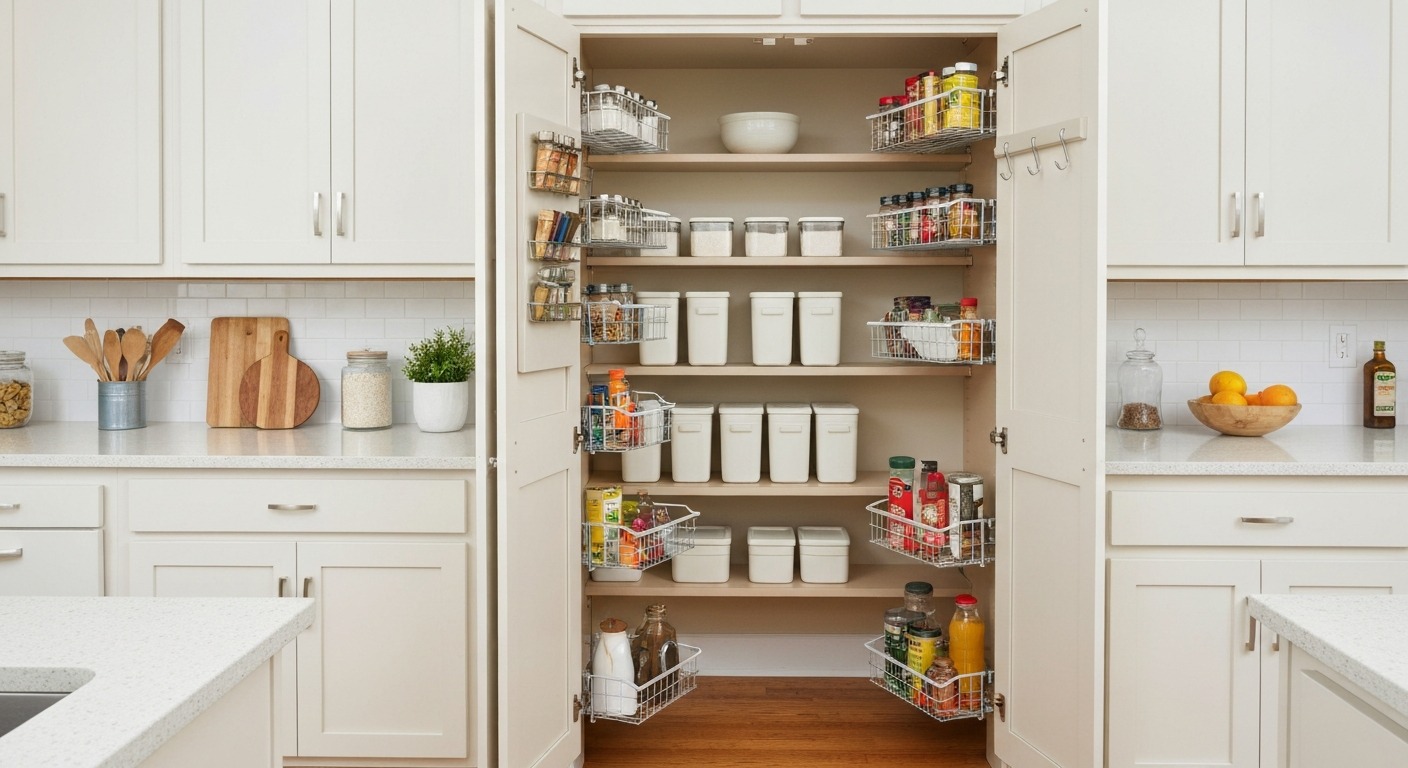
Small pantry maximised — door organisers, shelf risers, and square containers make every centimetre count
Walk-In Pantry Organisation
Walk-in pantries offer more space but also more ways to lose track of items. The principles stay the same — zones, visibility, maintenance — but the scale changes.
Zone Layout for Walk-In Pantries
Arrange zones based on your cooking workflow:
- Entrance zone — most-used daily items (cooking oils, salt, pepper, frequently grabbed snacks)
- Left wall — baking and breakfast zones
- Right wall — canned goods, pasta, and grains
- Back wall — bulk storage, seasonal items, overflow stock
- Lower shelves — heavy items, beverages, potatoes and onions in ventilated baskets
Walk-In Pantry Extras Worth Considering
Pull-out drawers for deep shelves eliminate the "items lost at the back" problem. Worth the $40–$80 investment per shelf.
Turntables on corner shelves where two walls meet. Corner space is notoriously wasted — a turntable makes it functional.
Clear bins for sub-category grouping. Within a zone, use open bins to group related items. A "Mexican night" bin with taco shells, salsa, and seasoning, for example.
A designated landing zone at the entrance for new groceries before they're sorted. This prevents the common mistake of shoving new items wherever they fit, which gradually destroys your zone system.
A shopping list station — a small notepad or whiteboard near the pantry entrance. When you notice something running low, write it down immediately. This closes the loop between pantry organisation and keeping an organised pantry for easier meal prep.
Seasonal Pantry Organisation
Your pantry isn't static — it changes with the seasons. What you stock in January differs significantly from what fills the shelves in July, and your organisation system should accommodate these shifts rather than fight them.
Winter Pantry Priorities
Winter cooking tends toward soups, stews, casseroles, and baking. Your pantry should reflect this:
- Move baking supplies to prime shelf space — flours, sugars, spices, and chocolate are in heavy rotation
- Stock up on canned goods — tomatoes, beans, stock, and coconut milk for one-pot meals
- Create a hot drinks zone — teas, cocoa, instant soups, and mulled wine spices grouped together
- Bulk grains and dried legumes take centre stage for hearty meals
Summer Pantry Priorities
Summer shifts toward lighter meals, salads, barbecues, and less oven use:
- Rotate snack items forward — crackers, dried fruit, trail mix, and rice cakes for grazing
- Oils and dressings move to accessible positions for salad-heavy cooking
- Reduce baking supplies to back shelves — less demand means less prime-shelf priority
- Hydration supplies — electrolyte packets, drink mixes, and iced tea bags
Seasonal Swap Method
Twice a year (April and October work well), do a 15-minute seasonal swap:
- Move seasonal items that are entering heavy rotation to eye-level shelves
- Move off-season items to higher or less accessible positions
- Check for expired seasonal items from the previous year
- Update your shopping list to reflect seasonal cooking changes
This simple swap keeps your pantry aligned with how you actually cook month to month, rather than fighting against seasonal changes all year.
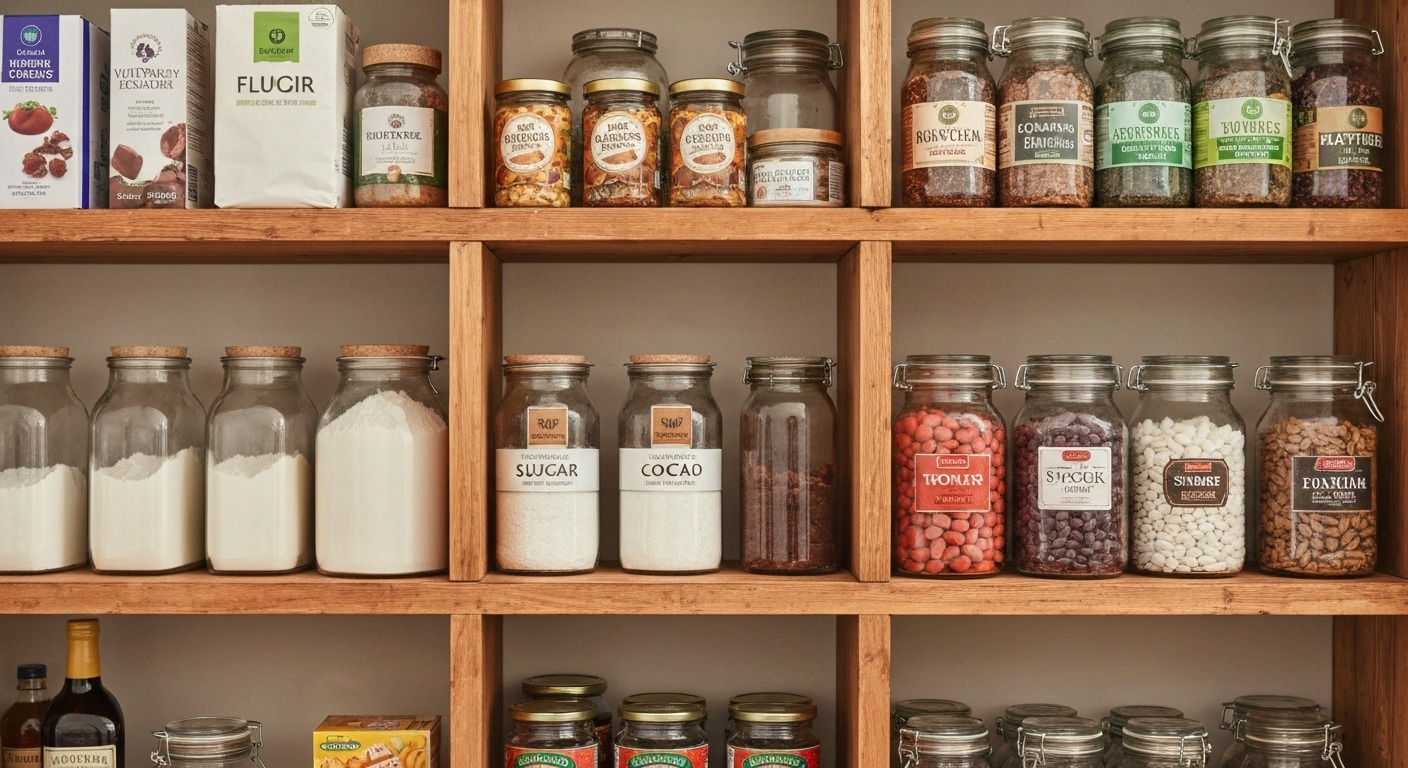
Adjusting your pantry layout seasonally keeps your most-used items within easy reach year-round
Top Pantry Organisation Products (2026)
These are the products with the highest practical impact based on professional organiser recommendations and verified customer reviews. You don't need all of them — choose based on your pantry type and biggest pain points.
OXO Good Grips POP Container Set (5-Piece)
$45–$65
Airtight push-button seal, clear BPA-free plastic, stackable square design. The industry standard for pantry containers — wide mouths, easy one-hand opening, and dishwasher-safe lids.
Check Price on Amazon →
Non-Slip Turntable Lazy Susan (2-Pack)
$15–$25
12-inch diameter with non-slip base and raised edges. Essential for deep shelves and corner access. Holds oils, sauces, condiments, and spice jars without items sliding off.
Check Price on Amazon →
Expandable Tiered Shelf Risers (3-Tier)
$12–$20
Step-style risers that elevate items at the back so every can and jar is visible. Expandable width fits standard pantry shelves. Doubles effective shelf visibility for canned goods.
Check Price on Amazon →
Over-Door Pantry Organiser (6-Shelf)
$25–$40
Hooks over standard pantry doors without drilling. Six adjustable wire shelves hold spices, snack bars, foil rolls, and small bottles. Adds 30–50% more storage to any pantry.
Check Price on Amazon →
Under-Shelf Wire Hanging Baskets (4-Pack)
$18–$28
Clip onto existing shelves to create extra storage underneath. Perfect for snack bars, tea boxes, spice packets, and small flat items. No tools or drilling required.
Check Price on Amazon →
Waterproof Chalkboard Labels + Chalk Pen (120 Pack)
$10–$15
Self-adhesive, waterproof, and reusable. Wipe clean with a damp cloth to relabel. Includes a white chalk pen. Multiple shapes and sizes to fit any container.
Check Price on Amazon →Pantry Organisation on a Budget
Instagram pantry transformations can cost hundreds of dollars. A functional pantry costs far less — and often costs nothing at all.
Free and Nearly Free Options
- Repurpose glass jars — pasta sauce jars, pickle jars, and jam jars make excellent pantry containers after a good wash
- Cardboard box dividers — cut cereal boxes to create shelf dividers and category bins
- Masking tape + marker labels — costs nothing, works perfectly, and is easily updated
- Rearrange before buying — reorganise what you have before purchasing a single new item
Under $25 Budget Setup
- Dollar-store bins for category grouping ($2–$5 each)
- Basic plastic shelf risers from a hardware store ($8–$12)
- Simple over-door shoe organiser repurposed for small pantry items ($10–$15)
- Masking tape and a permanent marker for labels ($0)
The Budget Principle
Spend money on organisation infrastructure (shelf risers, pull-out bins, door organisers) before aesthetics (matching containers, printed labels, decorative baskets). A functional pantry with mismatched containers beats a beautiful pantry that nobody can maintain.
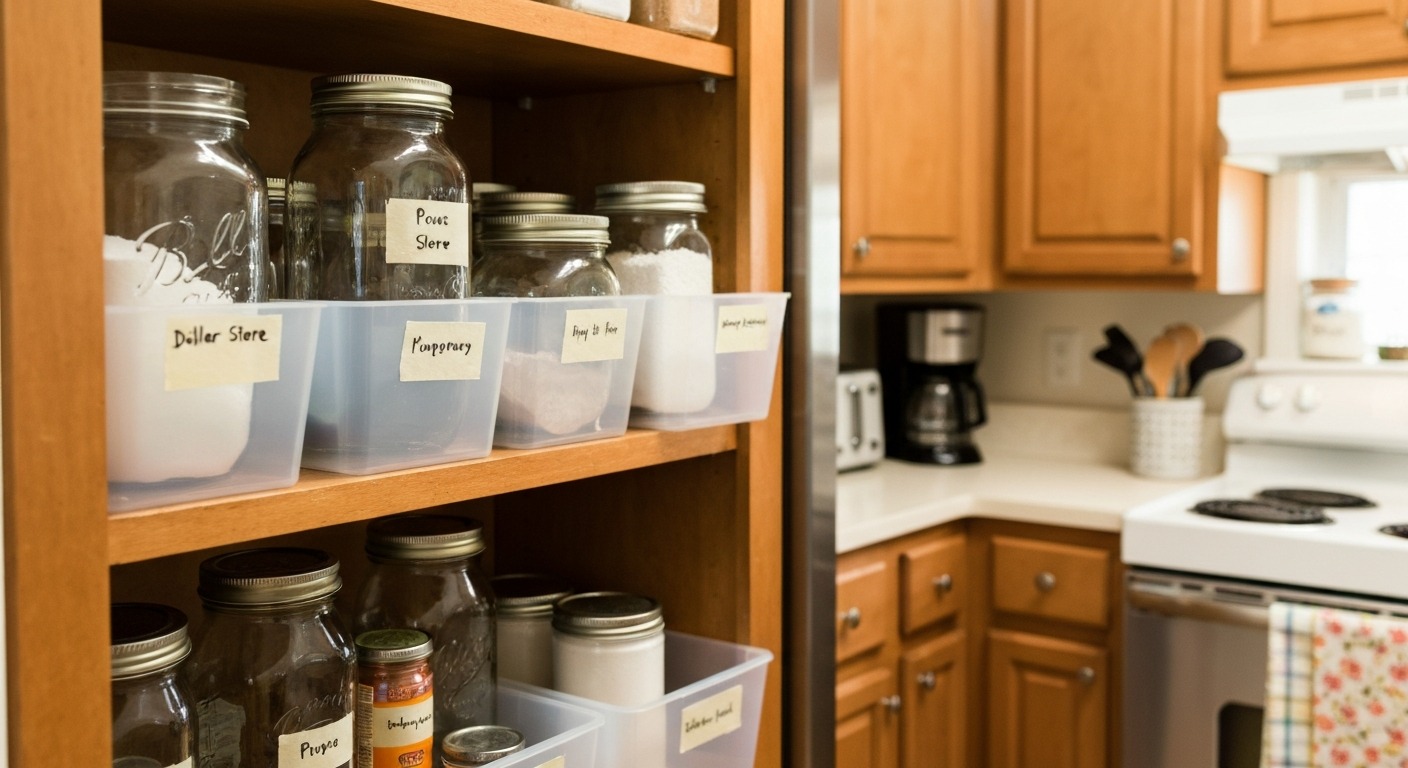
Effective pantry organisation doesn't require expensive matching containers — function always beats aesthetics
How to Maintain Your Organised Pantry
The organisation you build today will degrade without maintenance habits. Here are the four maintenance layers that keep a pantry functional long-term.
Daily Habits (5 Seconds Each)
- Return items to their zone when you finish cooking
- Don't leave empty or near-empty containers on shelves — refill, replace, or move to the recycling
Weekly Sweep (3–5 Minutes)
- Quick visual scan: anything out of place, anything running low
- Add low-stock items to the shopping list
- Wipe down any spills or crumbs before they attract pests
Monthly Check (10 Minutes)
- Check for items approaching expiry dates
- Rotate canned goods: new tins to the back, use oldest from the front (FIFO)
- Refill containers that are running low
- Assess whether any items should be relocated to a different zone
Quarterly Deep Audit (30–45 Minutes)
- Full audit: expired items, duplicates, items you haven't used in 3+ months
- Adjust zones if your cooking habits have changed (new dietary needs, seasonal shifts)
- Clean shelves thoroughly — remove everything, wipe down, and replace
- Reassess whether your container and labelling system is still working
The most important maintenance principle: Make putting things back easier than putting them somewhere random. If someone consistently puts the cereal in the wrong zone, the zone placement isn't intuitive — fix the zone, not the person.
For a broader approach to maintaining an organised home, see our comprehensive guide on how to declutter your home. If you're drawn to a more intentional approach, the KonMari method step-by-step guide applies beautifully to pantry items — keeping only what sparks joy (or at least gets used regularly) is a powerful way to prevent pantry clutter from returning.
Frequently Asked Questions
What is the best way to organise a pantry?
Zone-based organisation is the most effective method. Group items by how they are used — breakfast zone, baking zone, snack zone, canned goods zone — rather than by food type alone. This makes the pantry intuitive and easy to maintain long-term.
What containers are best for pantry organisation?
Clear, airtight containers with wide mouths are ideal. Square or rectangular shapes maximise shelf space better than round containers. Use consistent sizing within each zone for visual order and efficient stacking. OXO POP containers and Sistema KLIP IT are two widely recommended options.
How do I organise a small pantry with limited space?
Maximise vertical space with shelf risers and stackable containers. Use over-door organisers for spices and small items. Decant aggressively into square containers to eliminate wasted space from irregular packaging. Keep only frequently used items in the pantry itself and relocate seasonal or bulk items elsewhere.
How often should I reorganise my pantry?
Do a quick 5-minute tidy weekly, check expiry dates monthly, and do a full deep clean and reorganisation quarterly. Daily maintenance means returning items to their zones after cooking — this takes only seconds and prevents gradual disorganisation.
Should I decant everything into matching containers?
No. Focus decanting on items that create clutter or lose freshness fastest: grains, flours, cereals, pasta, nuts, and snacks. Canned goods, oils, and rarely used specialty items can stay in original packaging inside organised bins. Over-decanting creates unnecessary maintenance work.
What is the difference between organising a deep pantry vs a shallow pantry?
Deep pantries need pull-out drawers, turntables, and tiered risers to prevent items getting lost at the back. Shallow pantries benefit from single-row container placement and door-mounted storage to maximise every centimetre of accessible space. The key distinction is that deep pantries require tools for visibility, while shallow pantries require tools for capacity.
How much does it cost to organise a pantry properly?
A functional pantry organisation can cost as little as $0 using repurposed jars and tape labels. A mid-range setup with quality containers and a label maker runs $50–$150. Premium matching container sets cost $150–$400 depending on pantry size. Spend on infrastructure (risers, bins, door organisers) before aesthetics.
About the Author
Sophie Bennett is a home organization specialist with over 10 years of experience helping families create functional, sustainable storage systems. She focuses on practical solutions that work in real homes — not magazine-perfect setups that collapse after a week. Sophie has organised hundreds of kitchens and pantries for clients across the UK and US, and her work has been featured in Good Housekeeping, Real Simple, and The Kitchn.
Sources
- National Association of Productivity and Organising Professionals (NAPO) — 2025 Home Organisation Trends Report
- Food Waste and Household Storage study, Journal of Cleaner Production, Vol. 389 (2025)
- Australian Institute of Professional Organisers — Certified Kitchen Organisation Standards (2024)
- OXO Good Grips Product Testing and Durability Data, Consumer Reports (2025)
- USDA Food Safety and Inspection Service — Pantry Storage Guidelines (2024 revision)
- Small Space Living Survey, Apartment Therapy (2025) — pantry organisation in spaces under 50 sq ft
Related Articles:
- Best Closet Organiser Systems (2026)
- Best Kitchen Cabinet Organisers
- KonMari Method: Step-by-Step Guide
- How to Declutter Your Home