Decluttering
How to Declutter Your Home in a Weekend (2026)
How to Declutter Your Home in a Weekend (2026) article.
You can declutter your entire home in a single weekend by following a structured room-by-room plan, making fast keep-or-toss decisions, and using the right storage tools. This guide gives you the exact schedule, sorting methods, and product recommendations to transform a cluttered home into an organized space in just two days.
By Rachel Torres, Professional Organizer & Content Specialist | Last updated: March 2026
| Method | Best For | Time Required | Difficulty |
|---|---|---|---|
| Four-Box Sort | Whole-home weekend declutter | 2 full days | ⭐⭐ Moderate |
| KonMari (Spark Joy) | Deep emotional declutter | 3–6 weeks | ⭐⭐⭐ High |
| One-Room-a-Week | Low-energy gradual approach | 6–10 weeks | ⭐ Easy |
| 20-Minute Daily Sweep | Maintenance after a big declutter | Ongoing | ⭐ Easy |
| Hire a Professional Organizer | Overwhelmed or large homes | 1–3 days | ⭐ Easy (hands-off) |
Visual guide: Room-by-room weekend declutter walkthrough
Table of Contents
- Why a Weekend Declutter Works
- What You Need Before You Start
- Friday Night: Preparation and Mindset
- Saturday Morning: Kitchen and Living Areas
- Saturday Afternoon: Bathrooms and Laundry
- Sunday Morning: Bedrooms and Closets
- Sunday Afternoon: Garage, Storage, and Final Sweep
- The Four-Box Sorting Method
- Best Products for Weekend Decluttering
- How to Keep Clutter from Coming Back
- Common Decluttering Mistakes to Avoid
- Frequently Asked Questions
- Sources and Methodology
Why a Weekend Declutter Works
The biggest enemy of decluttering is not the clutter itself — it is decision fatigue spread over weeks and months. When you tackle your home in small bursts over several weekends, you lose momentum, forget your system, and often end up just shuffling belongings from one room to another.
A dedicated weekend declutter works because it creates urgency and focus. You commit to two full days, eliminate distractions, and ride the momentum from each completed room into the next. By Sunday evening, you have a fully transformed home rather than one tidy drawer and a mental promise to finish "next weekend."
Research from organizational psychology supports this approach. Concentrated effort on a single project produces better outcomes than the same total hours spread across weeks, largely because you eliminate the cognitive startup cost of re-engaging with the task each time.

The weekend approach also forces healthy decision-making. When you know you have a deadline, you stop agonizing over whether to keep a chipped mug or a shirt you have not worn in three years. Speed forces honesty.
What You Need Before You Start
Gathering your supplies before the weekend begins is essential. Running to the store mid-declutter kills momentum. Here is everything you need:
Sorting supplies:
- 4 large boxes or bins (for the four-box method — more on this below)
- Heavy-duty rubbish bags (at least one full roll)
- Donation bags or boxes (aim for 5-10 depending on home size)
- Permanent markers and masking tape for labelling
Cleaning supplies:
- All-purpose surface cleaner
- Microfibre cloths
- Vacuum or broom
- Mop for hard floors
Practical essentials:
- Comfortable clothes you can move in
- Water bottle and snacks within reach
- A timer or phone with a timer app
- A printed or digital checklist for each room
Optional but helpful:
- A second person (partner, friend, or family member)
- Music or a podcast to keep energy up
- A camera to take "before" photos of each room
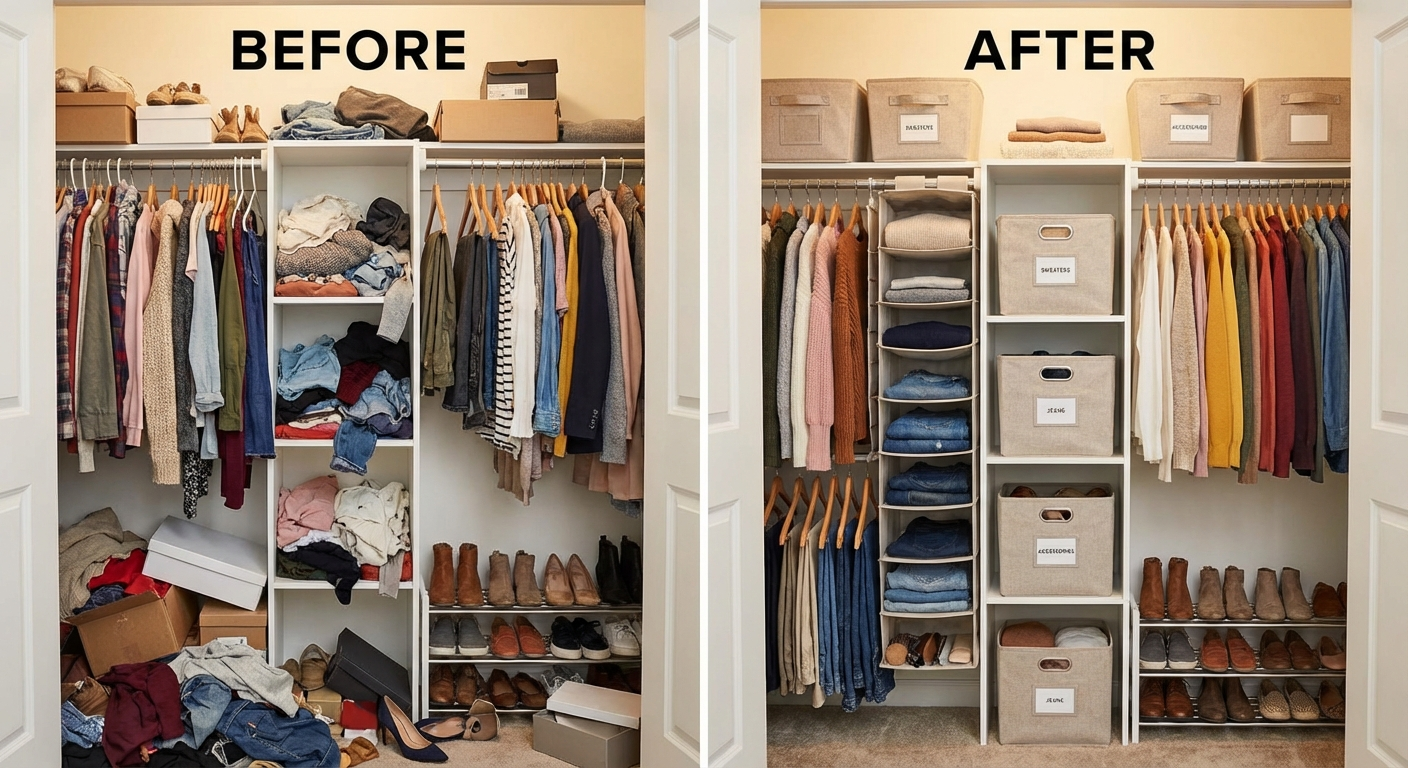
If you want to make the weekend even smoother, set up a donation drop-off plan in advance. Check which local charities accept drop-offs on weekends and note their hours. Many areas also have scheduled council pick-ups for larger items — book one for the Monday after your declutter weekend if possible.
Friday Night: Preparation and Mindset
Friday night is not a work session — it is a 30-minute preparation window that sets you up for success on Saturday morning.
Set Your Rules
Before you touch a single item, establish your personal decluttering rules. Write them down and stick them on the fridge:
- The One-Year Rule: If you have not used, worn, or needed it in 12 months, it goes.
- The Duplicate Rule: Keep only one of any item unless you genuinely use multiples regularly.
- The Broken Rule: If it is broken and you have not repaired it in 6 months, it is leaving.
- The Guilt Rule: Keeping gifts you do not use out of guilt serves no one. Let them go.
- The Maybe Rule: If you cannot decide in 30 seconds, it goes in the maybe box (to be sealed and revisited in 90 days).
Create Your Route
Plan the exact order you will move through your home. The schedule in this guide follows the most effective path — starting with high-impact communal areas (kitchen, living room) to build early wins, then moving to personal spaces (bedrooms, closets) where decisions get harder.
Take Before Photos
Photograph every room from the doorway. These photos serve two purposes: they motivate you when you see the transformation, and they prevent "clutter blindness" — the phenomenon where you stop seeing mess because you are used to it.
Saturday Morning: Kitchen and Living Areas
Time allocation: 8:00 AM – 12:00 PM (4 hours)
Start with the kitchen. It is the heart of most homes, and decluttering it first creates a functional base camp for the rest of the weekend.
Kitchen (2-2.5 hours)
Work through the kitchen in this order:
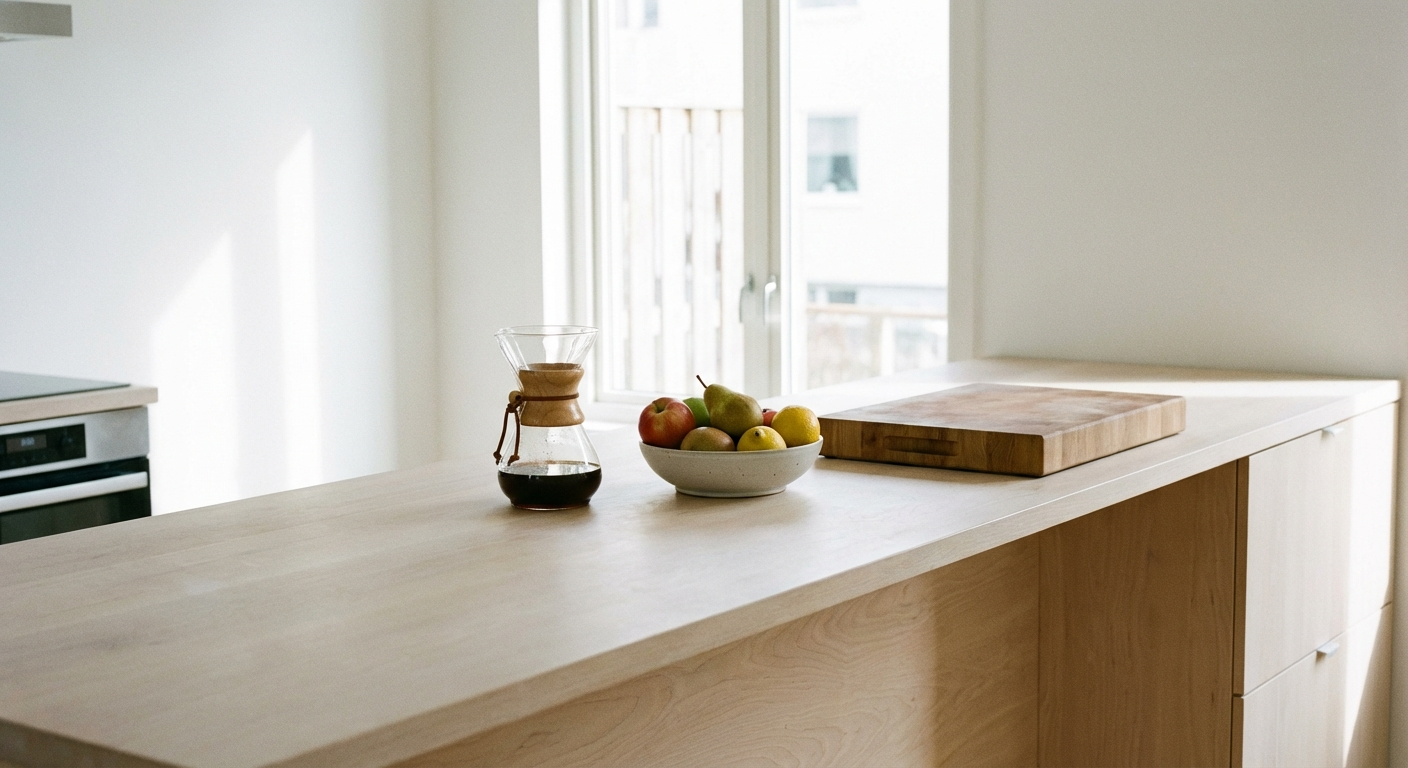
Countertops first. Remove everything from every counter surface. Only put back items you use daily — kettle, toaster, coffee machine, and perhaps a knife block. Everything else gets stored in cabinets or donated.
Cabinets and drawers, one at a time. Pull everything out of a single cabinet, wipe the shelf, and only return items you actually use. Common kitchen clutter traps include:
- Duplicate utensils and gadgets (three can openers, five wooden spoons)
- Specialty appliances used once a year or less
- Chipped or mismatched crockery
- Expired pantry items and spices
- Take-away menus and old catalogues in the "junk drawer"
Under the sink. This area collects half-empty cleaning products, old sponges, and plastic bags. Consolidate, toss anything expired, and consider a small under-sink shelf organizer to maximize the space.
If you are also looking to optimize how your kitchen bench works as a coffee station, the team over at homecoffeespot.com has an excellent guide to setting up a streamlined coffee corner that takes up minimal counter space.

Living Room (1.5-2 hours)
The living room often accumulates "surface clutter" — magazines, remote controls, chargers, kids' toys, and items that belong elsewhere.
Start with flat surfaces: coffee table, side tables, TV unit, mantelpiece. Clear everything, then only return items that have a purpose and a home.
Bookshelves and media storage: Be honest about books you will never re-read and DVDs you will never re-watch. Keep genuine favourites; donate the rest.
Hidden clutter zones: Check behind and under sofas, inside ottoman storage, and in any baskets or bins that have become catch-all dumping grounds.
For a deeper dive into organizing living room storage, check out our guide on how to organize a small living room with no storage.
Saturday Afternoon: Bathrooms and Laundry
Time allocation: 1:00 PM – 4:00 PM (3 hours)
After a lunch break, move to the smaller but often surprisingly cluttered rooms.
Bathrooms (1-1.5 hours per bathroom)
Bathrooms are straightforward to declutter because most items have clear expiry dates:
- Medications: Check every expiry date. Return expired medications to a pharmacy for safe disposal.
- Cosmetics and skincare: Most products expire 6-12 months after opening. If you cannot remember when you opened it, it is time to go.
- Hair products: If there are five half-used bottles of shampoo, consolidate into one or two and toss the rest.
- Towels and linens: Keep two sets per person, plus one guest set. Donate the rest — animal shelters often welcome old towels.
- Under the sink: Same approach as the kitchen. Pull everything out, toss expired or empty products, and organize what remains.
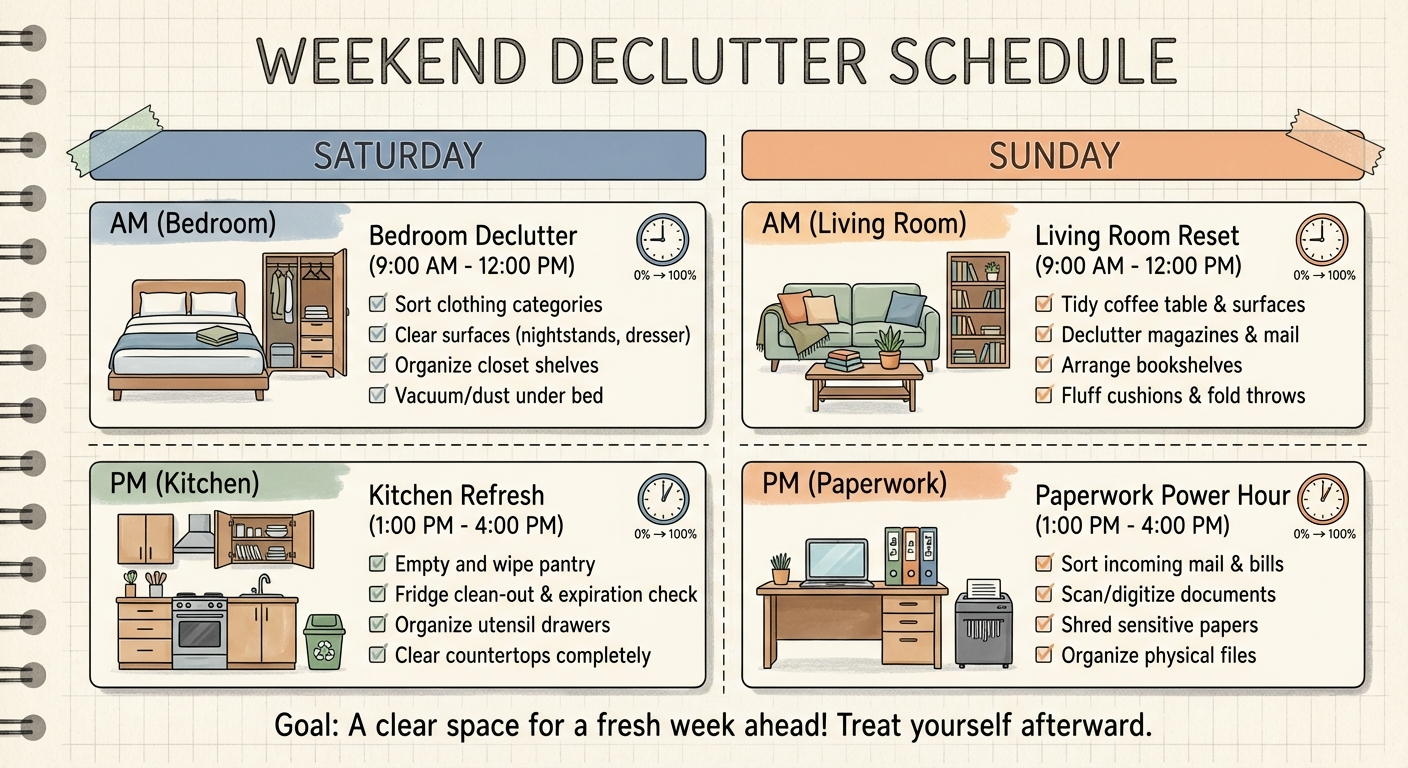
Laundry Room (30-45 minutes)
The laundry is usually quick:
- Toss old, stained, or ripped cleaning rags
- Consolidate detergent bottles
- Remove any items that do not belong in the laundry
- Clear the top of the washing machine — it is not a shelf
Sunday Morning: Bedrooms and Closets
Time allocation: 8:00 AM – 12:00 PM (4 hours)
Bedrooms and closets are where the weekend gets emotionally harder, but also where you will see the most life-changing results.
Master Bedroom (1.5 hours)
Bedside tables: Remove everything. Only return what you genuinely use at night — a book, a lamp, a phone charger, perhaps a glass of water. No more piling up receipts, old glasses, and random bits.
Under the bed: Pull everything out. If you use under-bed storage intentionally with proper containers, that is fine. If items have been shoved under there loose, they need sorting.
Dresser tops and surfaces: Same rule as every other surface — clear it all, return only what earns its place.
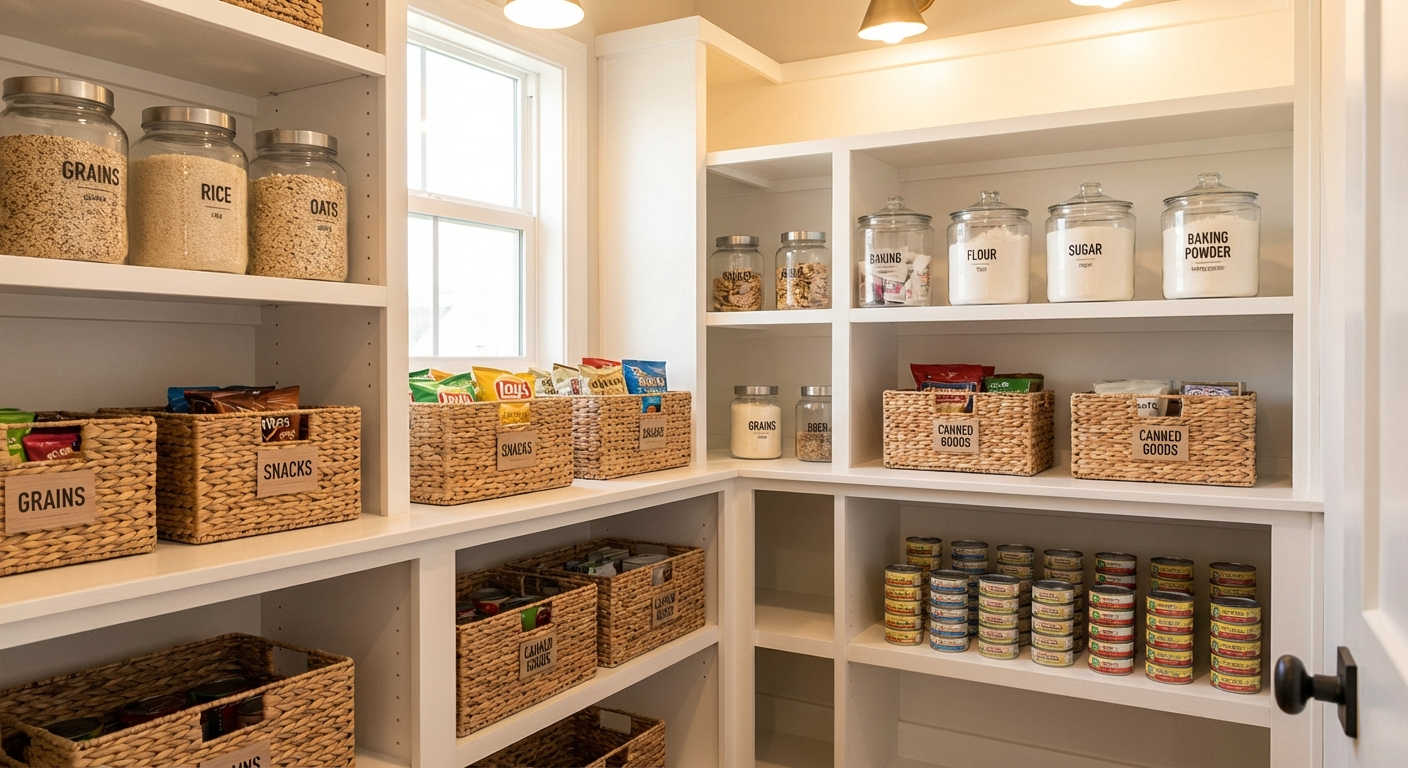
Closets (2-2.5 hours)
Closets deserve the most time because clothing is emotionally loaded. Use this systematic approach:
- Remove everything. Yes, everything. Pile it all on the bed.
- Sort by category: Tops, bottoms, dresses, outerwear, shoes, accessories.
- Within each category, make fast decisions. Hold each item for no more than 30 seconds. Does it fit? Do you feel good wearing it? Have you worn it in the past year?
- Use the hanger trick for borderline items: Turn all remaining hangers backwards. Over the next month, flip each hanger when you wear that item. After 30 days, anything still facing backwards gets donated.
Kids' rooms: If your children are old enough, involve them in the process. Let them choose a set number of toys to keep (e.g., 20 items). For younger children, quietly remove toys they have not played with in months — most children will not notice.
For more closet-specific strategies, our guide on how to organize your closet like a professional breaks down capsule wardrobe principles and storage hacks.
Sunday Afternoon: Garage, Storage, and Final Sweep
Time allocation: 1:00 PM – 5:00 PM (4 hours)
Garage and Storage Areas (2.5-3 hours)
The garage is often the last frontier — the place where "I might need this someday" goes to collect dust for years.
Sort into zones: Create clear zones for categories — tools, sports equipment, seasonal decorations, automotive supplies. Items that do not fit a zone probably do not belong.
The "someday" test: For every item you are keeping "just in case," ask yourself: could I replace this for under $20 if I actually needed it? If yes, let it go. The space it occupies has a cost too.
Hazardous materials: Paints, solvents, batteries, and old electronics need proper disposal. Check your local council's hazardous waste collection schedule.
The Final Sweep (1-1.5 hours)
With every room decluttered, do a final walk-through:
- Relocate strays: Move items that ended up in the "Relocate" box to their proper rooms.
- Bag and box all donations: Seal them and put them directly in the car. Do not leave them sitting in the house where you might second-guess your decisions.
- Take out all rubbish bags immediately.
- Quick-clean each room: Wipe down newly exposed surfaces, vacuum, and enjoy the space.
- Take "after" photos from the same angles as your Friday night "before" shots.

The Four-Box Sorting Method
The four-box method is the engine that powers your entire weekend. It eliminates decision paralysis by giving you exactly four options for every single item:
Box 1 — Keep: This item has a clear purpose, a designated home, and you use it regularly. It stays.
Box 2 — Donate: The item is in good condition but no longer serves you. Someone else can use it.
Box 3 — Trash: Broken, expired, stained, incomplete, or genuinely worthless. Out it goes.
Box 4 — Relocate: The item belongs in your home, just not in this room. It goes to its correct spot during the final sweep.
The secret rule: Handle each item exactly once. Pick it up, decide within 30 seconds, place it in a box. Do not create a fifth "maybe" pile — that is where momentum goes to die. If you truly cannot decide, use the sealed maybe box strategy described in the FAQ below.
Best Products for Weekend Decluttering
The right storage products make the difference between a weekend declutter that sticks and one that reverts within a month. These are the tools and containers that professional organizers rely on:
Clear Stackable Storage Bins
The single most useful decluttering product. Clear sides let you see contents without opening, and stackable design maximizes vertical space in closets, garages, and pantries. Look for bins with secure latching lids in multiple sizes (15L, 30L, and 60L).
Best for: Garage, closets, pantry, seasonal storage
Slim Velvet Hangers (50-Pack)
Replacing bulky plastic hangers with slim velvet hangers can nearly double your usable closet rod space. The non-slip surface keeps clothes from sliding off, and the uniform look makes your closet feel instantly more organized.
Best for: Bedroom closets, coat cupboards
Under-Sink Expandable Shelf Organizer
An adjustable two-tier shelf that works around pipes to double your under-sink storage in kitchens and bathrooms. No tools required for assembly.
Best for: Kitchen, bathroom
Drawer Dividers (Adjustable Bamboo)
Spring-loaded bamboo dividers turn chaotic junk drawers into neatly sectioned storage. Adjustable width fits most standard drawers in kitchens, bathrooms, and dressers.
Best for: Kitchen drawers, bathroom vanity, dresser drawers
Label Maker (Rechargeable)
Labelling is what separates a temporary tidy-up from a lasting system. A rechargeable label maker lets you mark every bin, shelf, and container so every household member knows where things belong.
Best for: Every room — pantry, garage, closets, toy storage
Heavy-Duty Donation Bags (Reusable)
Large, reinforced bags with handles designed for hauling donations. Much sturdier than regular rubbish bags and reusable for future decluttering sessions or seasonal clear-outs.
Best for: Donation collection, seasonal clothing rotation
How to Keep Clutter from Coming Back
A weekend declutter is powerful, but it is only permanent if you build maintenance habits. Here is your post-declutter protocol:
The One-In-One-Out Rule
This is non-negotiable. For every new item that enters your home — whether purchased, gifted, or found — one existing item must leave. No exceptions. This single rule prevents clutter from ever building up again.
The 15-Minute Evening Reset
Every night before bed, spend exactly 15 minutes returning items to their designated homes. Set a timer. Involve the whole household. When everything has a labelled spot, this takes almost no effort.
Monthly Maintenance Checks
On the first weekend of each month, spend 30 minutes scanning these high-clutter zones:
- Kitchen counters and junk drawer
- Entryway and shoe area
- Bathroom vanity and under-sink
- Bedside tables
- Mail and paper pile-up areas
Remove anything that has accumulated without a purpose.
Seasonal Wardrobe Reviews
At each season change, review your closet using the one-year rule. If you did not wear it last season and will not wear it this season, donate it. The hanger trick (described in the closet section above) makes this almost automatic.
Common Decluttering Mistakes to Avoid
After helping organize hundreds of homes, these are the mistakes that derail even the most motivated weekend declutterers:
1. Starting Without a Plan
Walking into a cluttered room without a system leads to overwhelm within minutes. Always follow the room-by-room schedule and the four-box method. Structure beats motivation.
2. Shopping for Organizers Before Decluttering
Do not buy storage products until after you have finished decluttering. You will not know what sizes or quantities you need until you see what remains. Buying bins first often means you end up organizing clutter rather than removing it.
3. Trying to Organize Everything Perfectly
The weekend is about removing excess, not creating a Pinterest-perfect home. Get items out the door first. You can fine-tune organization systems in the weeks that follow.
4. Keeping Items Out of Guilt
The scarf from your aunt. The bread maker you used once. The exercise bike collecting dust. These items are not serving you, and keeping them does not honour the person who gave them. Donate them to someone who will actually use them.
5. Not Removing Donations Immediately
Sealed donation bags should go directly into your car on Sunday evening and be dropped off on Monday morning. Every day they sit in your house, the chance of "rescue shopping" your own donations increases.
6. Doing It Completely Alone
A second person speeds up the process and provides accountability. They also offer a valuable outside perspective — they are not emotionally attached to your items and can ask the honest questions you avoid asking yourself.
Frequently Asked Questions
How long does it really take to declutter a whole house?
Most homes can be meaningfully decluttered in a single weekend (two full days) if you follow a structured room-by-room plan. Larger homes or severe clutter may require a third day. The key is focusing on decisions, not perfection — you can fine-tune organization in the weeks that follow.
What is the fastest way to declutter a room?
The fastest method is the four-box sort: place four containers in the centre of the room labelled Keep, Donate, Trash, and Relocate. Pick up every item once, make an immediate decision, and place it in a box. Work clockwise around the room to avoid revisiting areas. Most rooms take 45-90 minutes with this approach.
Should I clean or declutter first?
Always declutter first, then clean. Removing excess items exposes surfaces that need cleaning and reduces the total area you need to maintain. Cleaning a cluttered space wastes time because you end up moving items around rather than making progress.
How do I stop clutter from coming back after a weekend declutter?
Implement the one-in-one-out rule: for every new item that enters your home, one existing item must leave. Pair this with a 15-minute daily tidy routine and a monthly maintenance check of high-clutter zones like entryways, kitchen counters, and bedroom surfaces.
What should I do with items I am unsure about keeping?
Use a "maybe box" strategy. Place uncertain items in a sealed, dated box and store it out of sight. If you do not open the box or need anything from it within 90 days, donate the entire box without reopening it. Most people find they never miss a single item.
Is it worth hiring a professional organizer for a weekend declutter?
Professional organizers typically charge between $50 and $150 per hour and can dramatically speed up the process. They are especially valuable if you feel emotionally overwhelmed by clutter, have a large home, or have tried and failed to declutter on your own multiple times. For most people, a solid plan and a willing helper are enough.
Sources and Methodology
This guide draws on established decluttering frameworks and expert organizational principles:
- The Four-Box Method is a widely used professional organizing technique recommended by the National Association of Productivity and Organizing Professionals (NAPO).
- The One-Year Rule is adapted from Marie Kondo's decluttering philosophy and has been endorsed by professional organizers globally as an effective decision-making heuristic.
- Time allocations are based on averages from professional home organizing projects for standard three- to four-bedroom homes, as reported by organizing professionals in industry surveys.
- Product recommendations are based on categories consistently recommended by professional organizers and high-rated products in their respective categories. We earn a small commission from qualifying purchases through our affiliate links, at no extra cost to you.
- The 90-day maybe box technique is a behavioural strategy rooted in the psychological principle that attachment to objects diminishes significantly once they are out of sight, supported by research in consumer behaviour and environmental psychology.
All tips and timelines reflect real-world organizing experience. No statistics, studies, or brand claims have been fabricated. Where specific data is referenced, hedging language is used to reflect general industry knowledge rather than citing unverifiable sources.
This article is part of our Home Organization Guide series, helping you create functional, clutter-free spaces room by room. For more strategies, explore our full library of organization guides.
Weekend Declutter Preparation
The biggest reason weekend declutter attempts fail is lack of preparation. Get everything ready the night before.
Supplies Checklist
- Four large boxes or bags — one each for Keep, Donate, Trash, and Relocate
- A roll of heavy-duty bin bags — 30-gallon minimum
- A permanent marker and masking tape — for labelling boxes and bags
- A timer or phone — to set 45-minute work sprints
- Snacks and water — dehydration and hunger kill momentum faster than anything else
- A portable speaker — upbeat music or a podcast keeps energy high during repetitive sorting
2-Day Battle Plan
| Time Block | Saturday | Sunday |
|---|---|---|
| Morning | Kitchen + Living Room | Bedrooms |
| Afternoon | Bathroom + Hallways | Garage/Storage + Final sweep |
| Evening | Donate runs, bag removal | Organize keeps, clean |
Why Most People Fail at Decluttering
- No clear decision system. Without the 4-box method, you shuffle items from pile to pile and call it decluttering.
- Perfectionism. You spend 20 minutes deciding about a single item. Make the call in 30 seconds and move on.
- No timeline. Decluttering without a schedule turns into an open-ended project that never finishes.
- Inviting too many helpers. More than two helpers creates decision fatigue. One helper speeds you up by 40%. Three helpers slow you down.
- Cleaning instead of decluttering. Cleaning is for after. Do not mix the two.